
Making Quality Work for You
For many employees, a Quality Management System conjures images of thick binders, confusing vocabulary, and endless bureaucratic hoops. Procedures and requirements don’t exactly spark enthusiasm — and in most organizations, documented processes are seen as obstacles rather than tools. People avoid them because they can’t see the point.
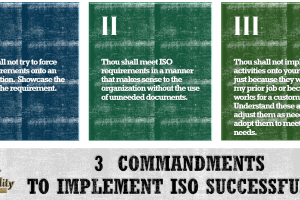
But here’s the truth: a QMS is simply a set of processes designed to help your business deliver what customers actually want. Customers expect quality. Your company’s goals should reflect that. And your QMS doesn’t need to be complicated — it just needs to make sense for how your organization already operates. In our experience, complexity creeps in when requirements are misunderstood and forced onto a business rather than developed naturally around real needs.
This is the most common mistake organizations make when implementing a QMS like ISO 9001 — they focus on complying with the standard rather than serving the business. They put the standard first. But it should be the other way around. Before anything else, you need a clear picture of your company’s activities, culture, challenges, and vision. That understanding is what allows you to shape the standard around your business, not the other way around. It’s harder than it sounds, but it’s essential if a QMS is going to genuinely take root.
Here’s something that surprises most established businesses when they begin a formal QMS implementation: they’re already meeting 60–70% of the requirements. Yet those leading the effort often feel compelled to make changes simply for the sake of compliance — borrowing what worked somewhere else and grafting it onto their organization. Rarely does anyone step back and ask, “What’s already working here, and how do we build on it?” That missed question is usually what triggers resistance. Employees start asking, “Why are we changing this?” and the only answer they get is, “Because ISO requires it,” which explains nothing and convinces no one.
When compliance is imposed rather than integrated, people begin drawing a line between “the ISO process” and the way they actually work. That divide is damaging. A better approach starts with a solid implementation plan — one that takes stock of existing processes, identifies what’s already aligned, and finds a logical path forward. The current version of ISO 9001 actually supports this, placing greater emphasis on process thinking before documentation. The goal is simplicity — not easy, but clear, purposeful, and built to last.